Crater Lake & Wizzard Island Crater Lake National Park, Oregon
If you you want to see the deepest blue, just gaze into Crater Lake. It is the deepest lake in the United States at nearly 2000 ft. depth. The crater was created around 7,000 years ago when Mt. Mazama exploded in a violent eruption. Local Native American tribes witnessed the eruption and have passed down many legends of how it was created.
Crater Lake National Park was established in 1902 by Teddy Roosevelt as our sixth National Park.
“Looking Up the Throat” Mt. St. Helens National Volcanic Monument, Washington
What an amazing sight from the Johnson Observation Center! The open throat of the mountain takes my breath away and draws me in. I stand in awe looking at the quiet scene, with my imagination going wild thinking of what the observers at this site must have thought and felt when the mountain erupted over forty years ago.
“A Glimpse of Pele’ “ Halemaʻumaʻu Crater, Hawai’i Volcanoes National Park
Halemaʻumaʻu crater, the home of Pele’, lies within the caldera of Kilauea. Pele’, the Hawaiian goddess of fire and volcanoes, was exiled from Tahiti because of her temper. Legends warn one that you better watch out if you meet a beautiful young girl or a white-haired older lady and don’t grant them what they wish!
I created this image from the Kilauea Crater Observation Center four years ago. It was a magnificent sight to see a glimpse of Pele’. This winter, we went up to the crater to find out that the Center and road up to it had been closed due to recent activity in 2018. We could not look down into the throat of the Halemaʻumaʻu crater to see Pele’.
“Mt. Rainer Afternoon Sun Break” Mt. Rainer National Park, Washington
This image was taken driving back down the hill from the “Sunrise” visitors center on the east side of Mt. Rainer. I had just finished a little hike up the side of the mountain to the tree line. Driving back down in the early evening, I looked back in my rear view mirror and saw a little sun break. I found the nearest turnout to enjoy a few fleeting moments before the shadows fully engulfed the mountain.
Every time I drive up to the Mountain it has a different feeling about it. Each facet looks different depending on the time of day and the amount of sunlight or shadows present. It may be covered with clouds or protruding into the clear sky above the tree-covered slopes below. It is a pleasure to just stop and gaze at its majestic presence.
“High-Watermark of Picket’s Charge” Gettysburg National Park, Pennsylvania
This post continues my series on some of our National Parks. Gettysburg National Park has always been one of my favorite places to visit. My first visit was over 50 years ago, back in 1966 when our family took a cross-country vacation in the “Blue Blimp”, a blue and white Dodge motor home. I was fascinated with the battlefield back then. When we lived in the Washington, DC area, we made several trips with our visitors, learning more each time. During our 16 years in the Philadelphia area, we must have made 9-10 visits. My last trip to the park was 2 years ago, when we visited the Washington, DC area. Each time I visit the battlefield, I learn something new and gain a greater understanding of what what this turning point in the Civil War meant to the Country and our people.
This particular site is a solemn point. It was the farthest point that the Confederates made against the Union forces during Pickets charge. The Confederates sent 15,000 troops across this field and suffered fifty-percent casualties. Gettysburg along with the concurrent Confederate surrender at Vicksburg marked the turning point of the Civil War.
“The Race Track” Death Valley National Park, Nevada
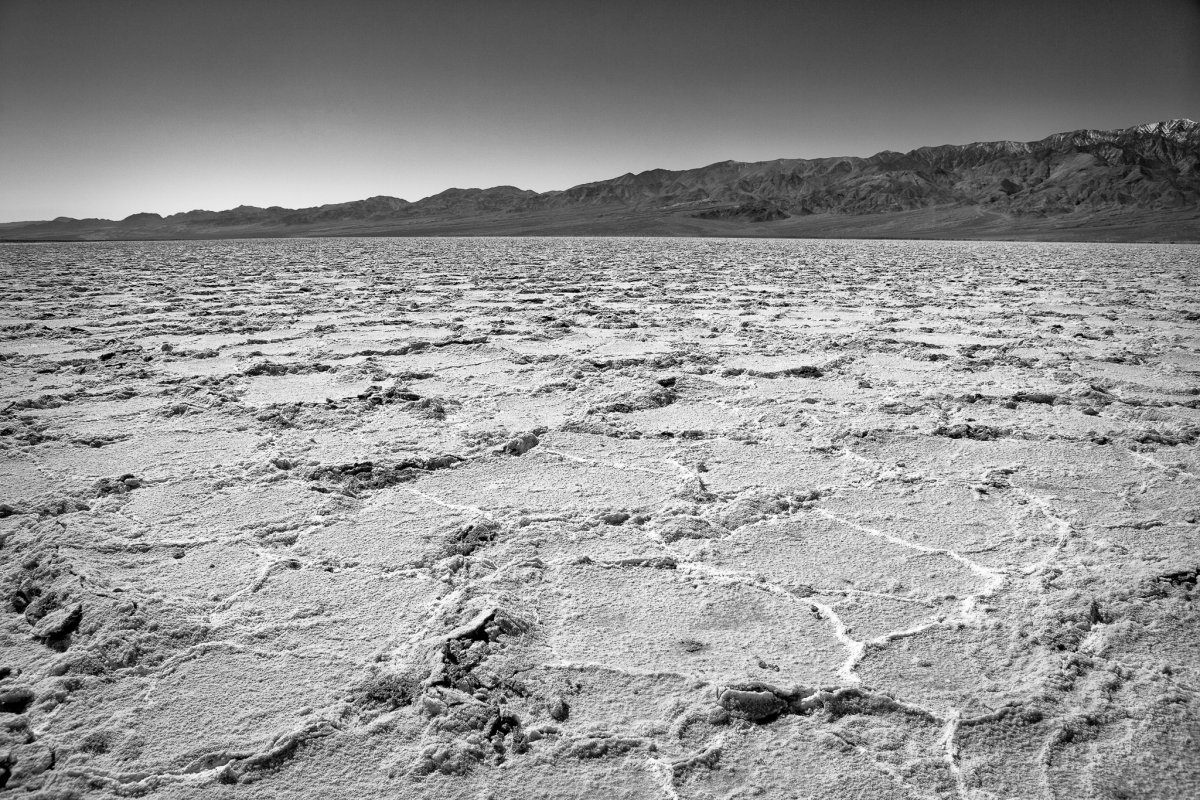
What the ????? How did the rock get here? Who or what pushed it? Or was it pulled? Scientists have been studying this since the early 1900’s. Theories have changed over time. In fact, the prominent theory at the time I took this image seven years ago has changed.
The current theory is developed from using time-lapse photography, weather stations, and GPS devices. During the winter of 2013, the elements came together and scientists were able to record the phenomenon of the sliding rocks. During a rain fall followed by an extreme cold night, a thin layer of ice formed. The ice lifted the rocks from the playa surface. The next morning, the ice started to melt creating a thin layer of water between the ice and the playa. The ice sheet started to break up leaving sections of the sheet floating on the water. Winds came up blowing the smaller ice sheets with the embedded rocks across the playa.
“Early Morning Sunrise on Otter Cliff” Acadia National Park, Maine
Acadia National Park … where do you start? Everywhere I turned was a photo opportunity. I was overwhelmed and had difficulty sorting out where I should focus. On this morning, I stumbled down to rocks overlooking the coast line with my tripod and camera. It was very dark and I had to use my tripod legs to feel my way to stepping places that were solid. Once I got to a spot, I did not want to move. Luckily, I had a 180 degree view from east to west. My initial focus was to the east waiting for the sun to rise over the horizon. At first it was not too exciting since there were no clouds on the horizon. I glanced over my shoulder to the west and saw the sun starting to light the distant Otter Cliffs. I quickly turned around and created this image. I used a blue and gold polarizer to help bring out the oranges in the sky and rocks as well as the deep blue in the water. It was a glorious morning!
I am still not able to get out and about much, so I thought I would do a little series of some of the National Parks that I have visited over the years. My first entry is from the Great Smokies National Park in Tennessee.
Springtime in the Smokies is a glorious time of the year. Dogwoods are starting to bloom and light green leaves are emerging from the deciduous forests as seen from this image taken near Cades Cove. The early morning lights turn the light green leaves into an almost gold color.
Roaring streams in lush green stream beds with multiple waterfalls grace the park. Wildlife, including black bears, are becoming active. Morning fog covers much of the area and gradually dissolves to present misty vignettes. Distant hills are covered with a misty haze giving rise to their namesake “Smoky” Mountains.
On a clear day, it is hard to beat the drive down to Bend, Oregon from Eastern Washington along US Highway 97. Leaving the Yakima Valley, the snow peak of Mt. Rainer is in the NW, and Mt. Adams overlooks the valley from the west. Reaching Goldendale, Mt. Adams is to the NW and Mt. Hood is to the SW. Turning the bend on Highway 97 heading down into the Columbia Gorge, Mt. Hood is dead ahead (as in this image). Climbing back out of the Gorge to the Oregon Plateau, Mt. Adams is to the north and Mt. Hood is due west. Continuing south past Shaniko, one sees a little turn out with a clear view of the Cascade Range. From here, Mt. Adams is in the far north, Mt. Hood is in the NW, and Mt. Jefferson, Mt. Washington, and Three-fingered Jack are to the west and SW. Traveling south out of Madras Mt. Jefferson rises prominently above the farm lands to the west. Approaching Redmond, the Three Sisters and Broken Top are seen to the west and SW. Then Mt. Bachelor rises up as you enter the Bend area. It is a pretty impressive four hour drive on a clear day, which is pretty common in sunny Eastern Washington and Oregon!