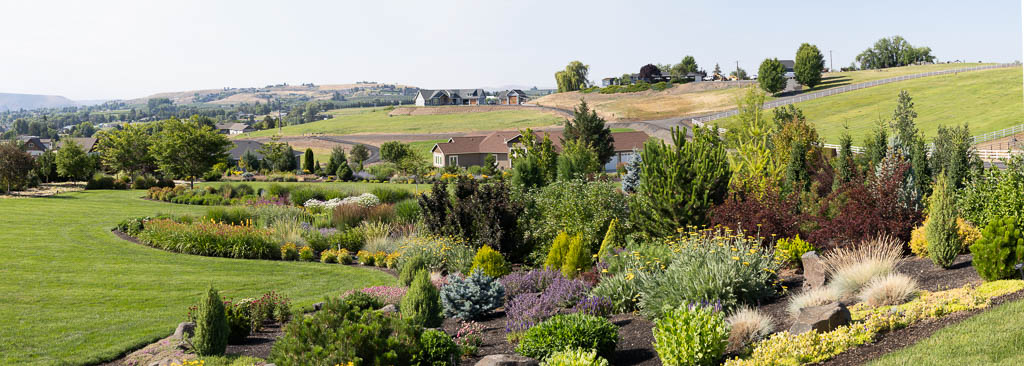
This image is the winding path down from our upper viewing area through the rock garden to the lawn below. We are attempting to create an “alpine-type” rock garden on the slope between two of our lawn areas. It will take several years to fill in to where the plants cover the bark and flow over the edge of the path. The path itself is a winding s-curve through the garden. The evergreens are dwarf versions. Ground cover is placed to fill in around the evergreens and other shrubs.
The rock garden is in its infancy. Last year it was just a sloping, difficult to mow lawn. All it needs now is time, patience, and a little care to mature.
I just couldn’t stand it any longer. I had to get out to a safe place and do a little photography. It was early afternoon with a bright blue sky. It wasn’t the best time for color photography, but it was a great time for shadows and black & white, infrared images. My sherpa and I trekked out in my wheel chair, sherpa pushing, and I with my camera in hand. The arboretum was not crowded, so it was easy to keep our “social distance.”
Sherpa was wonderful, moving me to just the right spots for me to create a few images. We saw this lone bench in the shade. The scenery was great and no-one was around. It was a good place to take a break. Thank you sherpa for a great excursion.
“When you see red, shoot” … especially in the garden. The leathery red leaves of this Oregon grape popped out from the background. The Oregon grape (Mahonia aquifolium) is a multi-season star of the garden. Its dark green leaves provide a strong contrast with its bright yellow spring blooms. These turn into blue berries in the late summer/fall. In the winter, the leaves turn to various shades of orange, burgundy, and red.
We have planted several mahonia among the pines and spruces of our conifer grove to provided a multi-season complimentary contrast.
The squiggly branches of this tree shrub would catch anyone’s interest. My challenge creating this image was to compose it to achieve a balance within the image and to have a light background to highlight the curly branches.
Heatherwood does not have one of these … yet. It is another opportunity to make an interesting addition.
The glow of this back/side lit expired hydrangea bloom stopped me in my tracks. It was like if it was a bright red stop sign signaling me to stop and pay attention to what it had to offer. Each fall, I face a hard decision to deadhead the spent blooms for a better bloom next year, or let them be to provide special winter interest. We solved the problem this spring by planting several additional plants in the lower part of the garden.
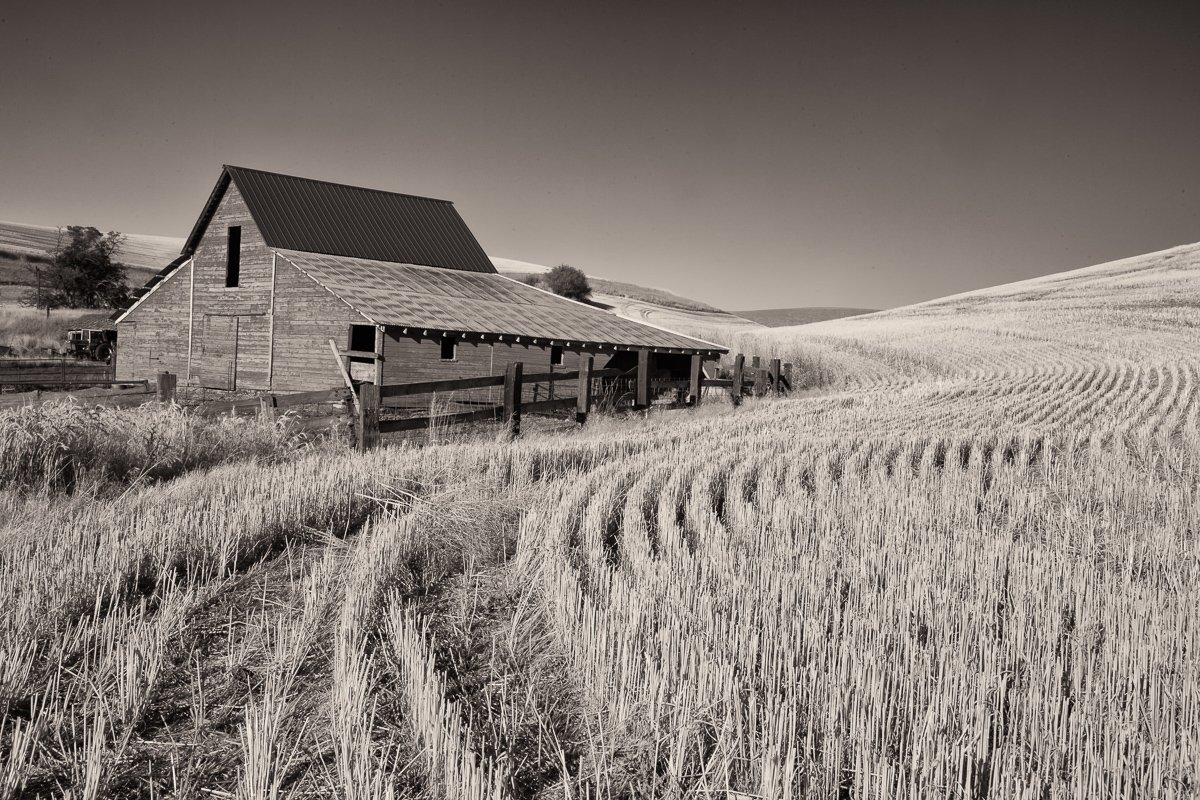
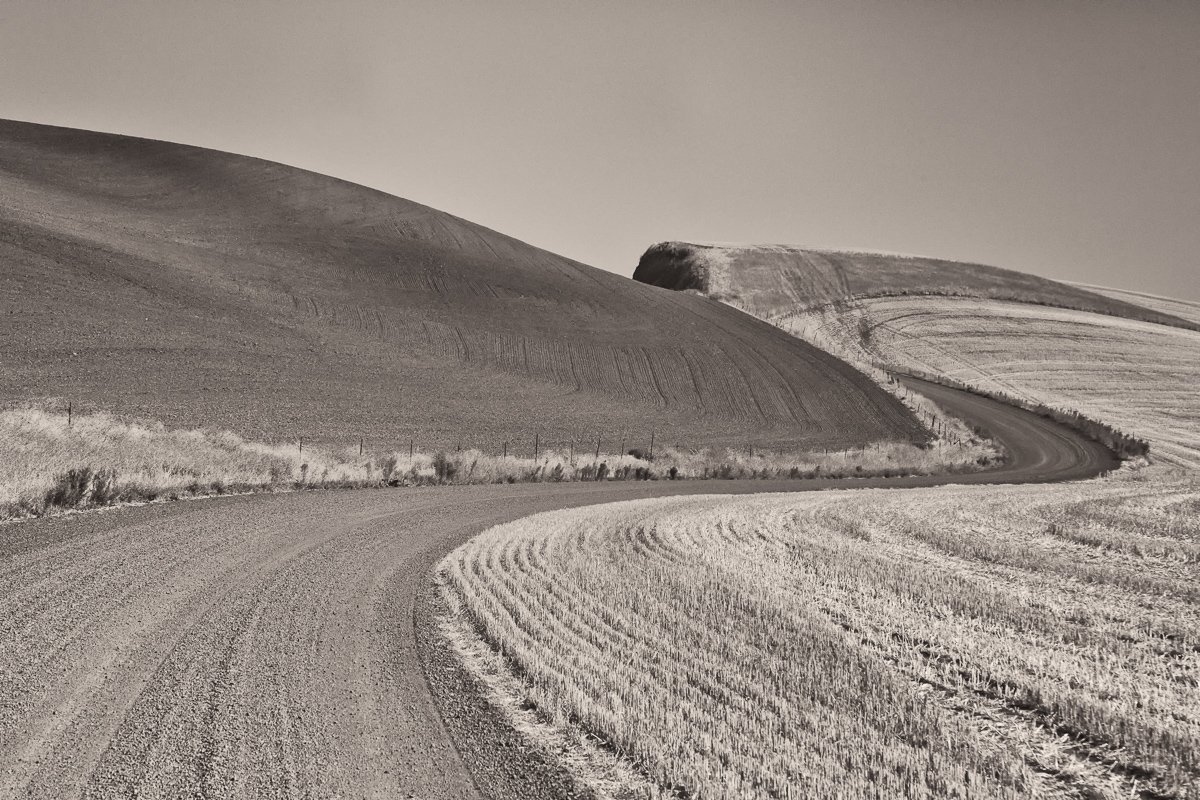
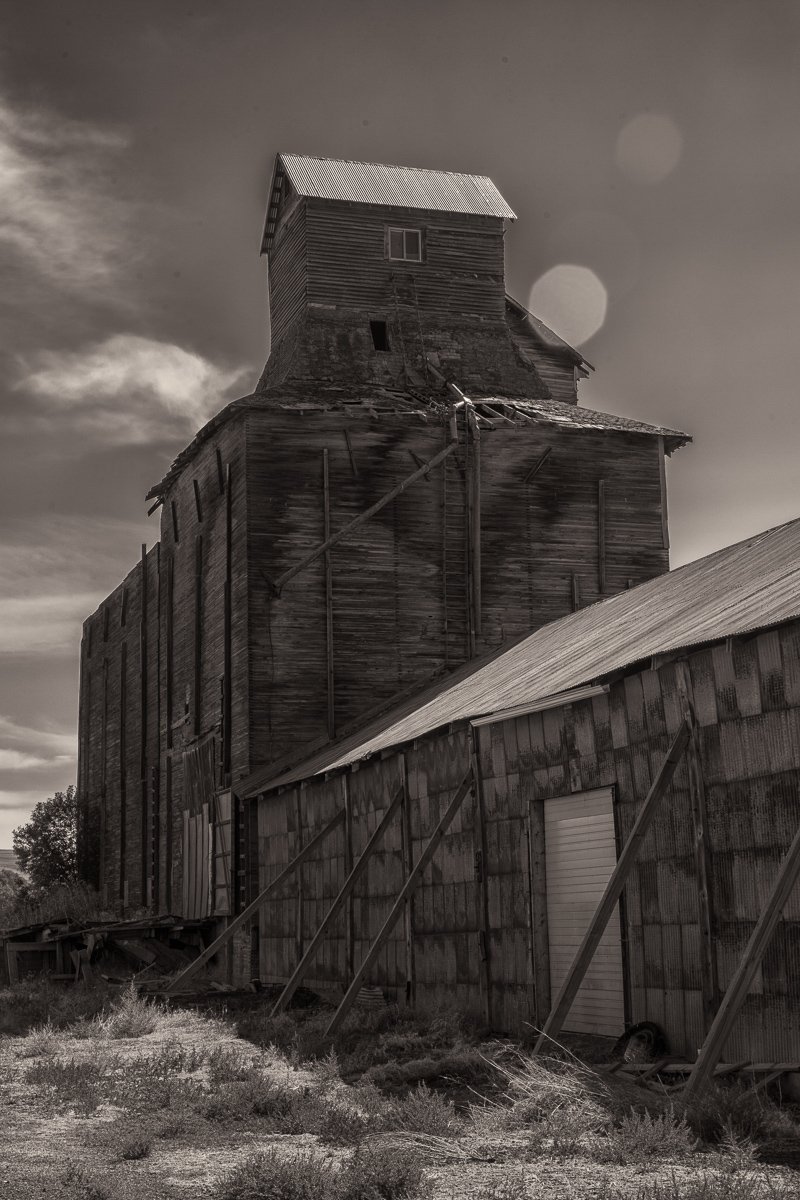
I had planned to visit the Palouse in June to see the spring greens and yellows. It just wasn’t meant to be. I am yearning to get out with my camera for an adventure. Maybe later on this month I will be able to travel for a couple of days out to the Palouse. It should not be too crowded so I will be able to maintain social distancing during the trip. Warm summer breezes and softly blowing grains will be waiting.
As the temperatures hover in the high 90’s, our new meadow continues to display a variety of color. I long to be able to get our among the flowers and become one with my camera and the beautiful blooms. For the next several weeks, I will need to be content with viewing alongside and from above. Patience is not one of my strongest virtues.
This is another one of our ‘”viewing rooms” at the southeast corner of our property. Looking north from here I can see the lower lawn area, the meadow and the crabapple grove on my right. Circled around the back and to the far right, is a conifer grove. A large Zelkova on the left provides shade from the afternoon sun. In a few years, this will be a protected hidden alcove. It will be a good spot to watch young ones play on the grass.
Our current “stay at home” and “social distancing” environment does have a few advantages. It gives me the opportunity to refresh some of my photography lessons. David duChemin, one of my instructors, stresses that to make a meaningful/compelling photograph, a photographer must first have a vision. That vision translates to having an intent for each image that is taken by a press of a cameras shutter.
This same thought is directly applicable to designing a landscape. When we first started designing our future arboretum one of the first things we did was to walk around the property to identify what scenes we wanted to protect and emphasize from potential “viewing rooms.” Selah Butte and the old Naches-Selah irrigation flume was a mandatory view. We picked a point near the southwest corner of our open lower lawn to build a protected viewing point. This point is where this image is taken from. We designed a planting area behind this point, an oval patch of lawn in front, and other curved planting and lawn areas between to develop a little room. In the back of the room, we planted trees to create shade from the afternoon sun. We framed the view of the butte with an oak and a Katsura tree. Other trees in the mid-ground have a limited height and will not interfere with the view. The summer sun rises directly over the butte. The setting sun lights the hillside up with a warm orangish glow. It will be a great place to welcome the rising sun with a cup of coffee as well as a peaceful place to enjoy a glass of wine as we enjoy the warm glow of the setting sun.
Now, let’s get back to the original question, “Why did I create this image?” My intent was simply to create a baseline illustrating the view that we have at the completion of our first phase of our Heatherwood’s landscape design. The image was created mid-day on the first day of summer 2020. I plan to develop a history of the passing of the seasons, morning and afternoon perspectives, and maturing of our Heatherwood arboretum over time.